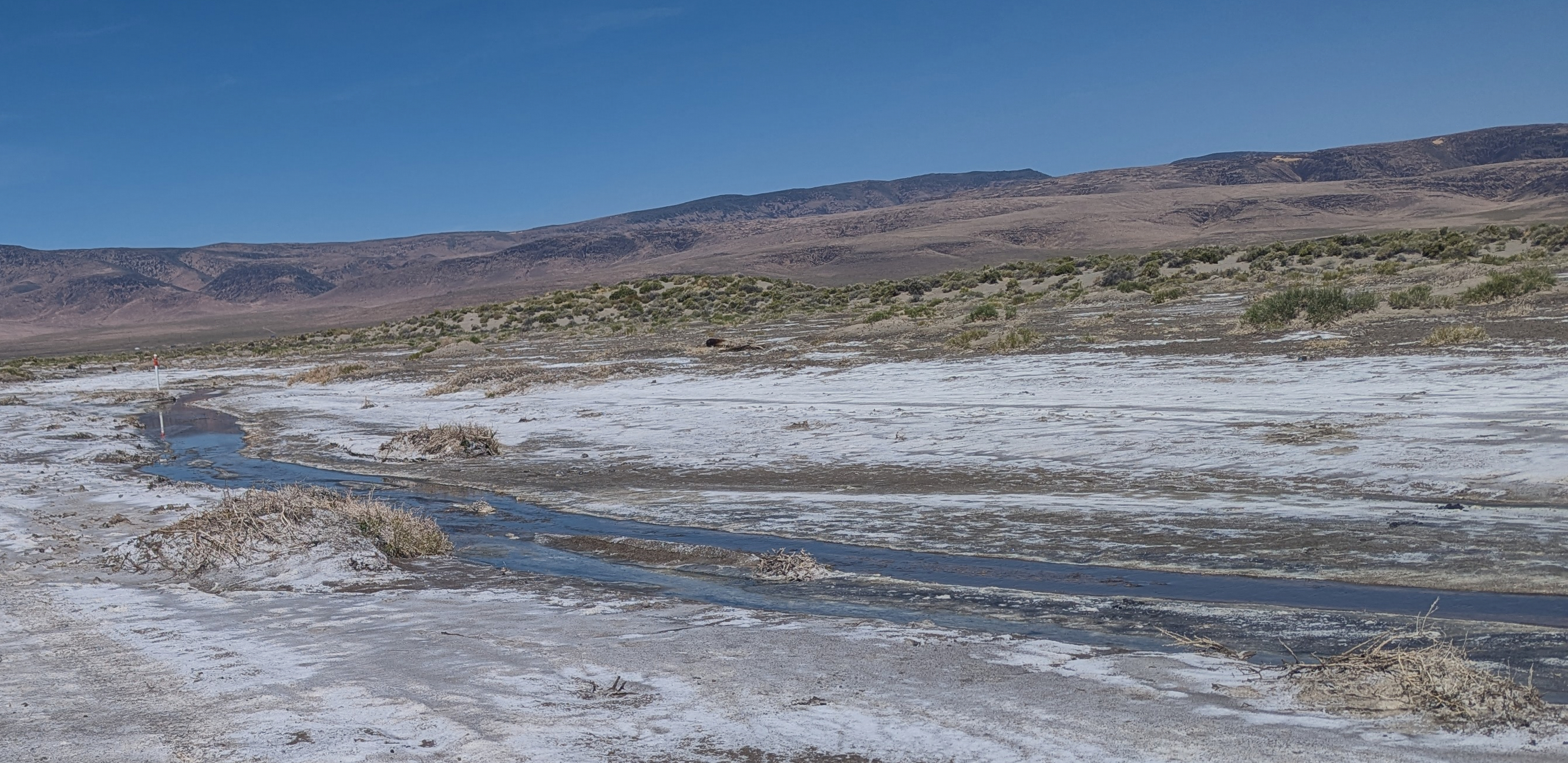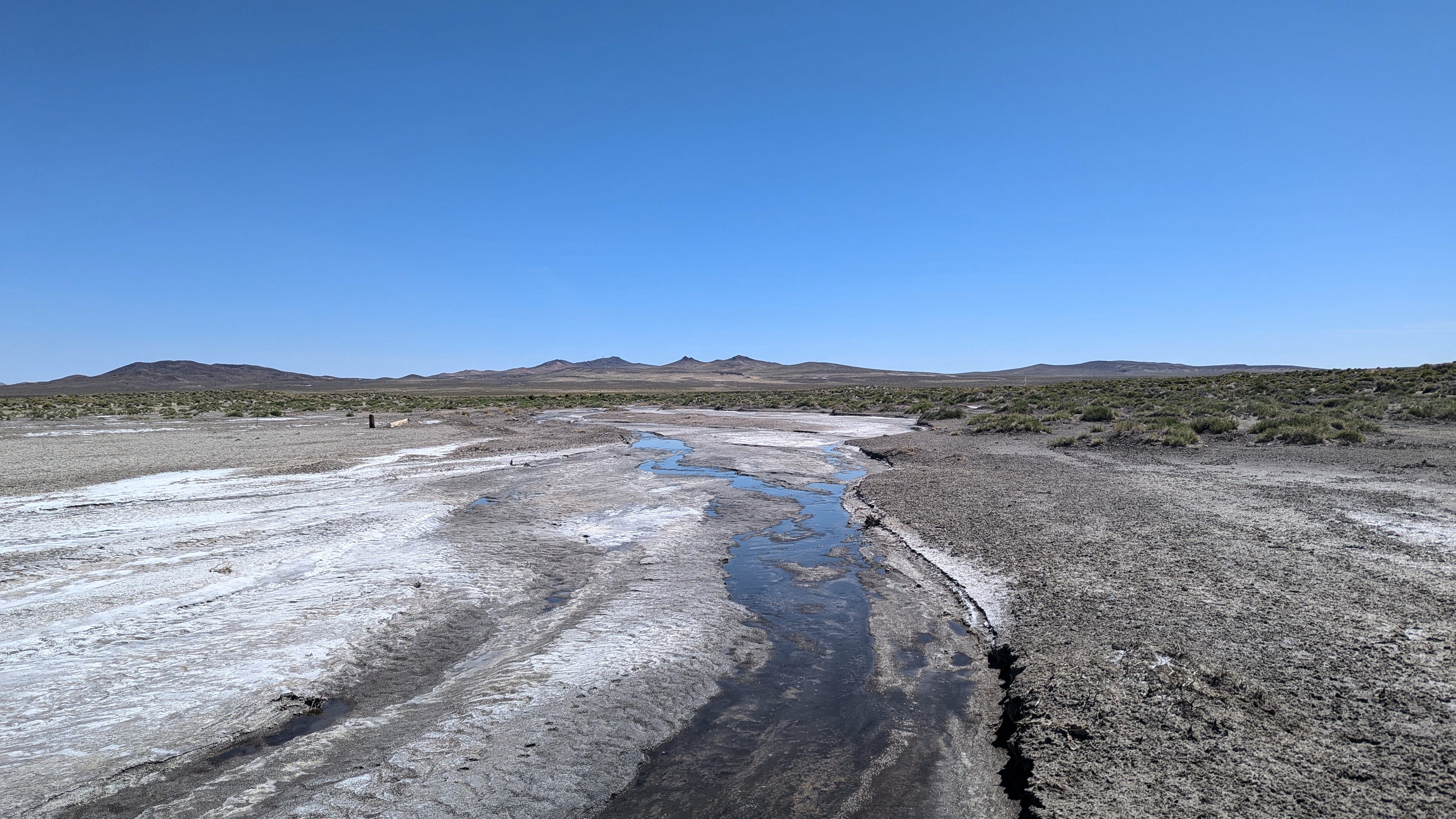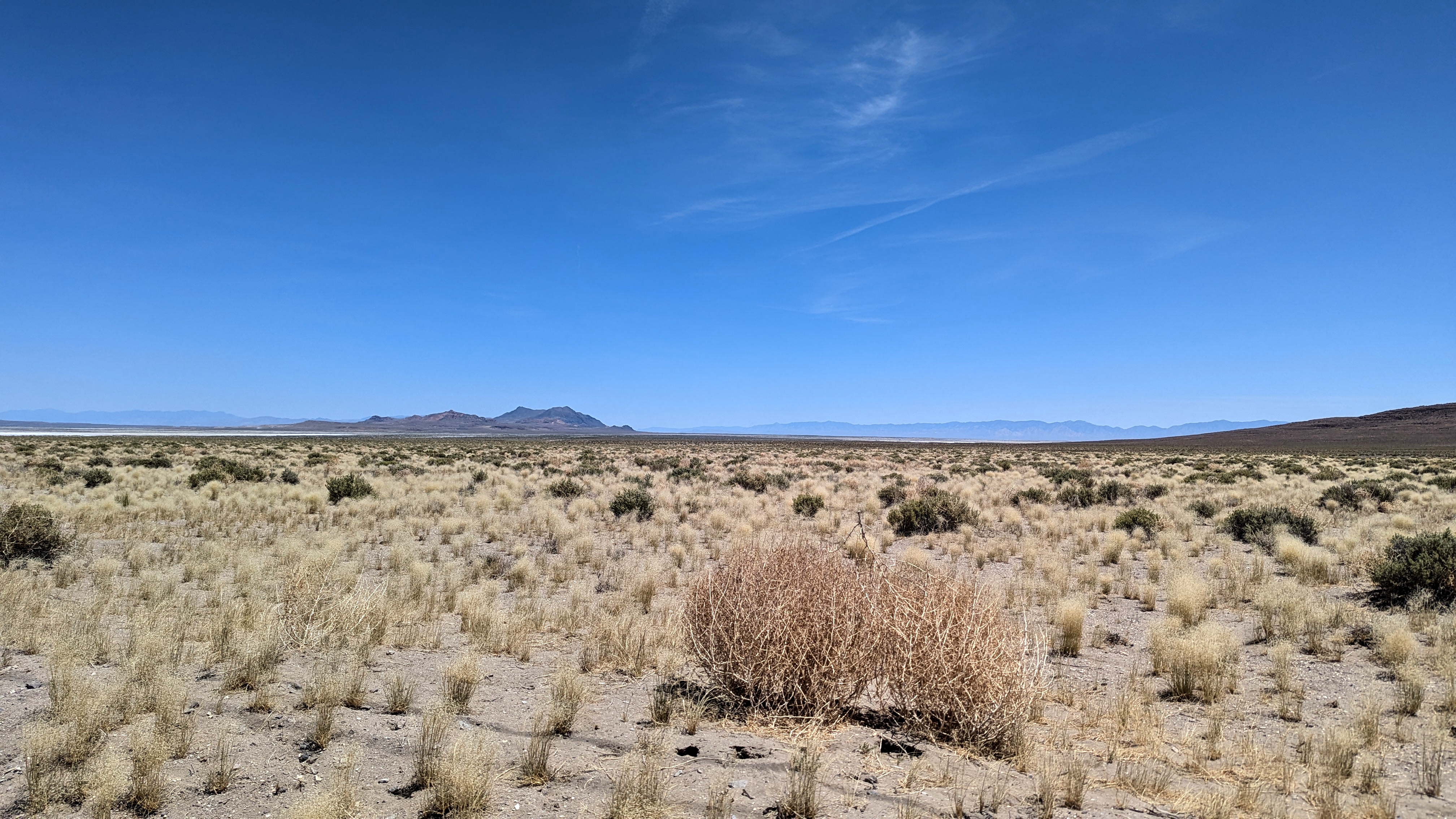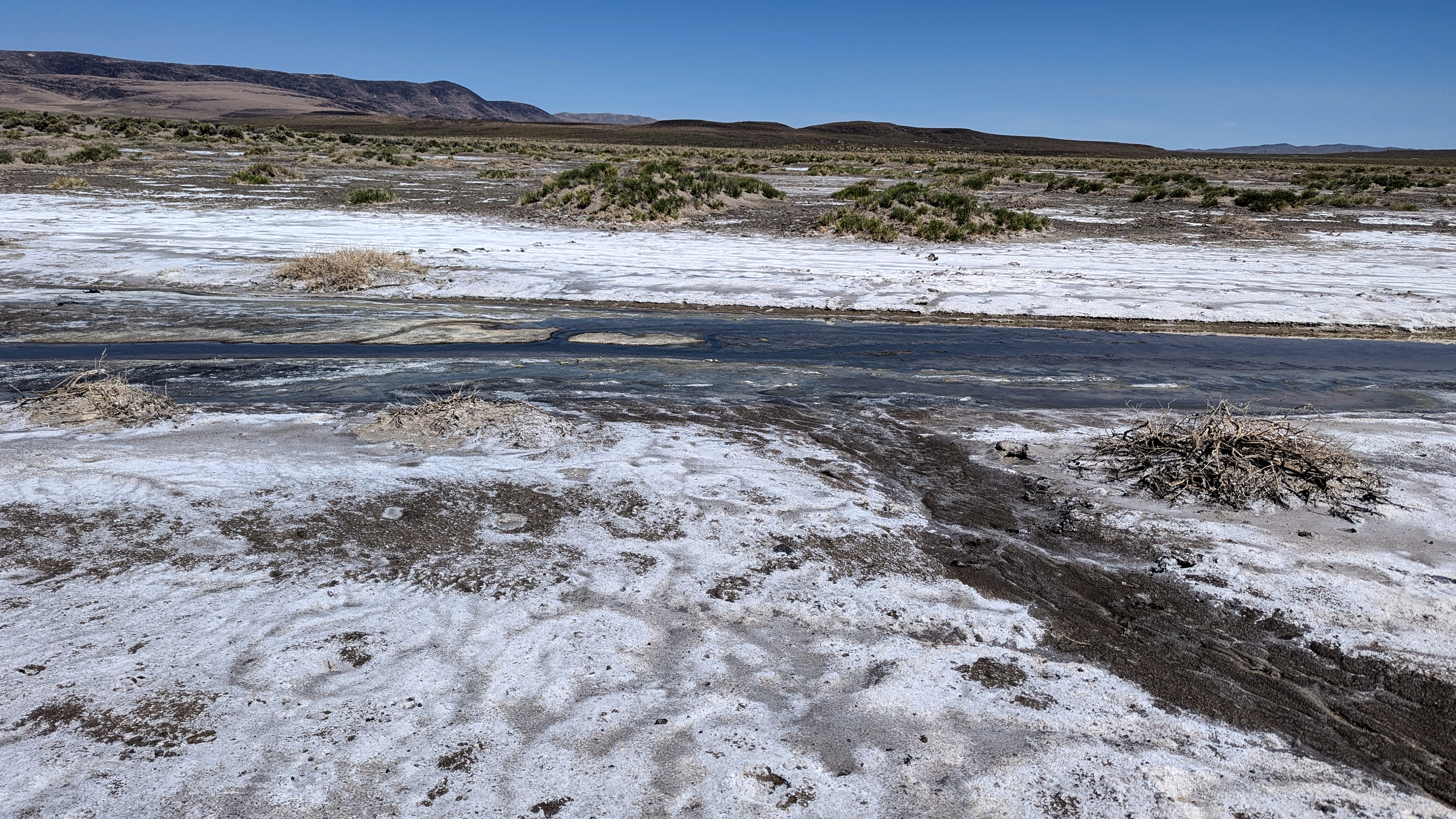
The Lithium Creek Project is an early-stage lithium brine exploration project located in Churchill County, Nevada, approximately 32 kilometres northeast of Fernley and approximately 70 kilometres east of Reno. The Project is situated in a well-established mining jurisdiction and benefits from proximity to regional infrastructure, including highways, rail, power, geothermal energy facilities, and the growing U.S. battery supply chain hub in the Reno area.
Apex is targeting lithium-bearing brines within basin-fill sediments in a structurally controlled and geothermal-influenced geological setting. The Project provides Apex with exposure to a U.S.-based lithium exploration opportunity in Nevada, one of North America’s most active lithium jurisdictions.
Project Size and Claim Position
The Lithium Creek Project consists of active and pending unpatented placer mining claims covering approximately 4,720 acres that are open for mineral exploration and entry. The Project also includes approximately 780 acres of additional legacy Eagle Salt Works claims located on Bureau of Reclamation lands that are currently closed to mineral entry but remain of conceptual interest to the Company should the land status change in the future.
The active and pending claim position includes the Eagle Salt Works and Desert Salt Works prospect areas, which collectively provide Apex with a sizeable land package across prospective lithium brine target areas in the Fernley Sink and Carson Sink regions.
Eagle Salt Works and Desert Salt Works Areas
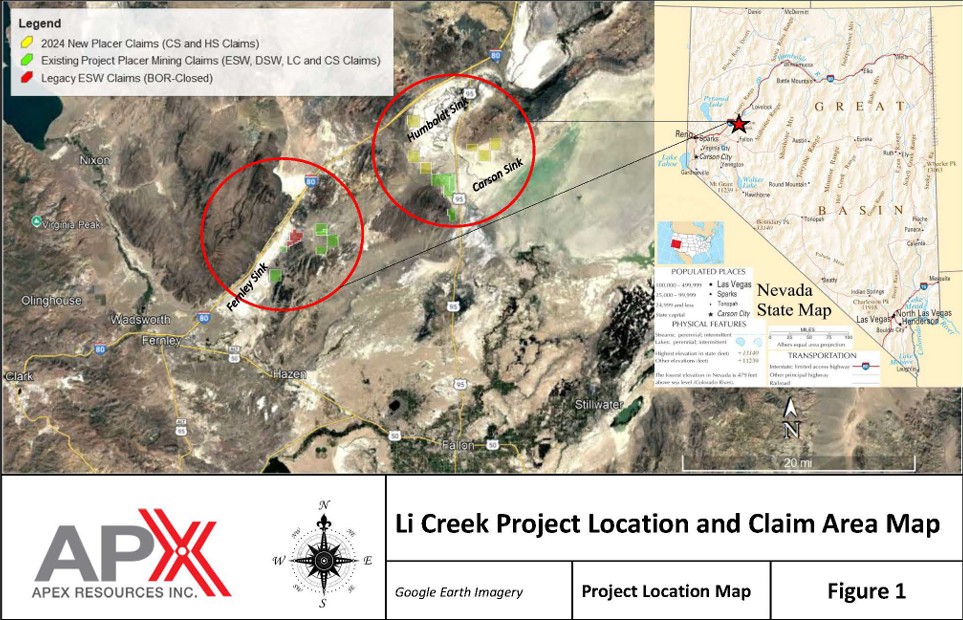
The Lithium Creek Project is composed of two principal prospect areas: the Eagle Salt Works area and the Desert Salt Works area. The Eagle Salt Works prospects are located along the western flank of the Hot Springs Mountains in the Fernley Sink area, while the Desert Salt Works prospect is located approximately 12 miles north in the Carson Sink area.
Lithium Creek Project Location and Claim Area Map
Both areas are interpreted to occur in or near closed basin environments influenced by faulting, geothermal activity, historic lake-bed sediments, and basin-fill materials. These features are important because lithium brine systems typically require a source of lithium, fluid movement through faults or permeable units, and a basin setting where lithium-bearing fluids can accumulate and concentrate over time.
Relevant Geology
Lithium Creek is located near the transition between the Walker Lane structural belt and the Basin and Range province, a geological setting characterized by faulting, basin development, geothermal activity, and volcanic and sedimentary rocks. The Company’s exploration model is based on the potential for lithium-bearing geothermal fluids to move through fault systems and collect within basin-fill sediments.
The Project area includes geological features considered favourable for lithium brine exploration, including:
- Structurally controlled basin settings;
- Geothermal influence from nearby systems;
- Historic lake-bed and playa environments;
- Basin-fill sediments that may host brines;
- Fault structures that may act as pathways for lithium-bearing fluids;
- Potential lithium source rocks, including volcanic tuffs and clay-bearing sediments.
Regional Lithium Context
Nevada is one of the most important lithium jurisdictions in North America and hosts several lithium companies and projects, including Albemarle’s Silver Peak lithium brine operation, Lithium Americas’ Thacker Pass Project, Ioneer’s Rhyolite Ridge Project, American Lithium’s TLC Project, Century Lithium’s Clayton Valley Project, and other lithium-focused companies active across the state.
Lithium Creek’s location near Reno, regional transportation corridors, geothermal infrastructure, and the Nevada battery supply chain provides Apex with a strategic exploration position in a region already recognized for lithium development and critical minerals investment.
Early Exploration Results
Initial surface water and shallow groundwater sampling completed on the Project has returned elevated lithium and boron values. The Company’s NI 43-101 technical report reported lithium concentrations ranging from approximately 13 mg/L to 330 mg/L and boron concentrations ranging from approximately 28 mg/L to 400 mg/L from 13 water samples collected from surface water, shallow groundwater, historic wells, pits, and evaporation vats.
Apex’s March 2025 investor presentation also reported additional shallow test-hole sampling, including lithium values up to 393 mg/L.
These results are early-stage in nature and do not define a mineral resource. However, they confirm the presence of lithium-bearing brines in sampled locations and provide a technical basis for additional exploration.
Exploration Path Forward
Lithium Creek remains an early-stage exploration project. No mineral resource estimate has been completed, and further work is required to determine the extent, continuity, grade, hydrogeological characteristics, and potential recoverability of lithium-bearing brines on the Project.
Next steps include:
PHASE 1
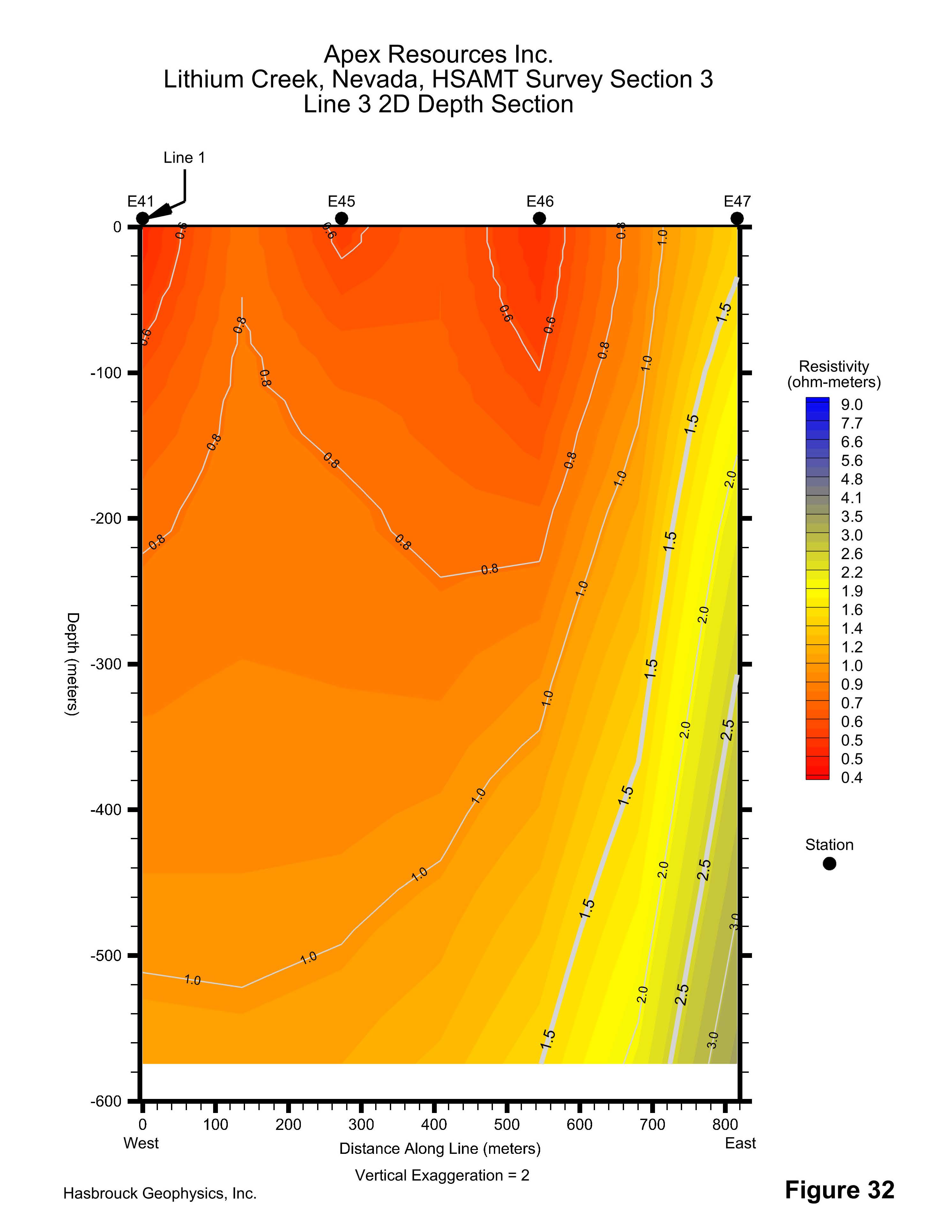
• Geophysics including MT survey to define geological Setting
• Systematic grid sampling to define brine targets
• Percussion Drilling ~40 holes to 500 feet
• 2-4 Deep holes to 2000 feet
PHASE 2
• Assay results and assessment
• Initial resource calculation
• Further infill drilling
• DLE Sample Test
Apex believes Lithium Creek provides exposure to a Nevada-based lithium brine exploration opportunity with encouraging early-stage lithium-in-brine results, a sizeable claim position, favourable geological indicators, strong regional infrastructure, and a clear exploration path to evaluate the Project’s potential.